

Punjabi Counselling in Surrey, BC
Therapy in Punjabi, Hindi, and English — for those who need to be truly understood.
Some feelings don't translate. The weight of family expectations, the pressure to hold everything together, the silence around mental health in our communities — these aren't things you should have to explain from scratch, or struggle to put into words in a second language.
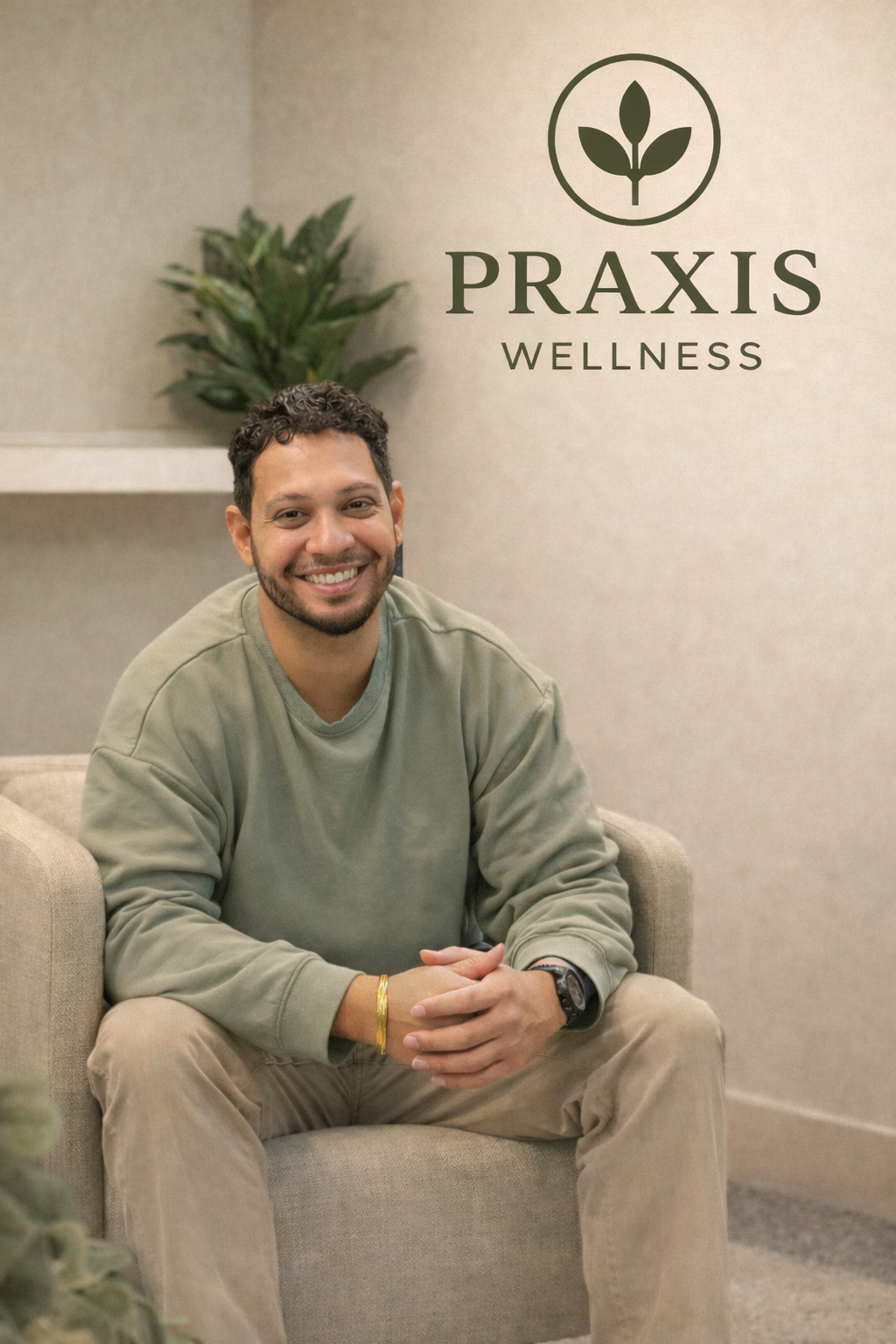
At Praxis Wellness, therapy is offered in Punjabi, Hindi, and English by a Registered Clinical Counsellor who understands the cultural landscape you're navigating — not just clinically, but personally.
In-person in Surrey · Virtual across BC

You Might Recognise This…
Many South Asian clients come to therapy carrying experiences that have never had a proper space — shaped by family dynamics, cultural expectations, and the quiet pressure to appear strong.
Support is available for:
Anxiety, overthinking, and chronic stress
Trauma and unresolved past experiences
Relationship and family conflict
Emotional exhaustion and burnout
ADHD and attention challenges
Substance use and coping patterns
Cultural identity, migration, and intergenerational pressure
You don't need to have the right words. You just need to begin.

Many people already have insight into their patterns — they know what's happening, but knowing hasn't been enough to change it. That's not a personal failing. It's how unprocessed experiences work.
Therapy at Praxis Wellness goes deeper than conversation. Sessions integrate:
Emotion-Focused Therapy (EFT) — to work with the emotions beneath the surface
EMDR — to process and release the hold of difficult memories
Somatic-based healing — to address how stress and trauma are held in the body
CBT-based strategies — to shift unhelpful thinking patterns and build practical tools
This integrated approach supports change that is felt — not just understood.
Understanding Is Just the Beginning
Frequently Asked Questions
As you consider whether counselling feels right for you, it’s natural to have a few questions about the process, the approach, and what to expect. Take a look at the FAQ or reach out anytime.
-
The free 15-minute consultation is designed for exactly that. You can share what you're looking for, ask questions, and get a sense of whether the approach feels right — with no pressure to continue.
-
That's more common than you might think. You don't need precise language to begin. EMDR, EFT, and somatic techniques are all designed to work with experiences that are hard to articulate — helping you process and integrate what you're carrying, even when words fall short.
-
Many people come in with real insight into their patterns but haven't experienced lasting change. The work here focuses on integrating emotional, cognitive, and somatic processes — not just talking about what's happening, but working through it at a deeper level.
-
That hesitation makes complete sense. Therapy moves at your pace, and you don't have to share everything at once. What matters is building enough trust to begin exploring what feels important — in a space that already understands the cultural context you're coming from.
-
No. Some clients come with a specific concern and prefer a shorter-term focus. Others choose to explore deeper patterns over time. The direction is always guided by your goals.
-
Yes — and this is central to how therapy works at Praxis Wellness. Clients come from a wide range of cultural backgrounds, including many from South Asian, Punjabi, and multicultural communities. Whatever your background, you won't need to spend your sessions explaining your cultural context from scratch — understanding how culture, family dynamics, and lived experience shape our emotional wellbeing is already built into the work.
-
Absolutely. Sessions can be conducted entirely in Punjabi, Hindi, or English — or a natural mix of all three, however feels most comfortable for you. Many clients find that certain emotions or experiences are simply easier to express in their first language, and that's completely supported here.
-
Yes — direct billing is available for most extended health benefit plans. If you're unsure whether your plan is covered, feel free to ask when you reach out and we'll help clarify. Sessions are also payable by e-transfer or credit card, whichever is most convenient for you. If cost is a concern, sliding scale options are available — just mention it when you get in touch.
-
Yes. Everything discussed in sessions is strictly confidential. As a Registered Clinical Counsellor, I am bound by professional and ethical standards that protect your privacy. Information is only shared in very specific, legally defined circumstances — such as if there is a risk of serious harm. This is especially important for clients who are concerned about privacy within close-knit communities. Your sessions are a private space, and that privacy is taken seriously.